We have always optimized our content to rank in search results. Every article, blog post, and web page is optimized with search ranking factors in mind so that when a user searches for relevant keywords on Google, the website appears in the top results and earns a click. For a long time, digital marketing and SEO worked around this formula.
Table of Contents
ToggleBut for some time now, one thing has become hard to ignore. Rankings and impressions are still coming in, but they have failed to get clicks at the same pace as before. Users are getting answers directly from generative search results, info boxes, and snippets without even visiting a website. This shift has made zero-click marketing, and it’s one of the most discussed tactics in digital marketing.
So if you’re not clicking the way you used to, how can your brand stay visible and keep growing online? The answer is in zero-click marketing.
What is Zero-Click Marketing?
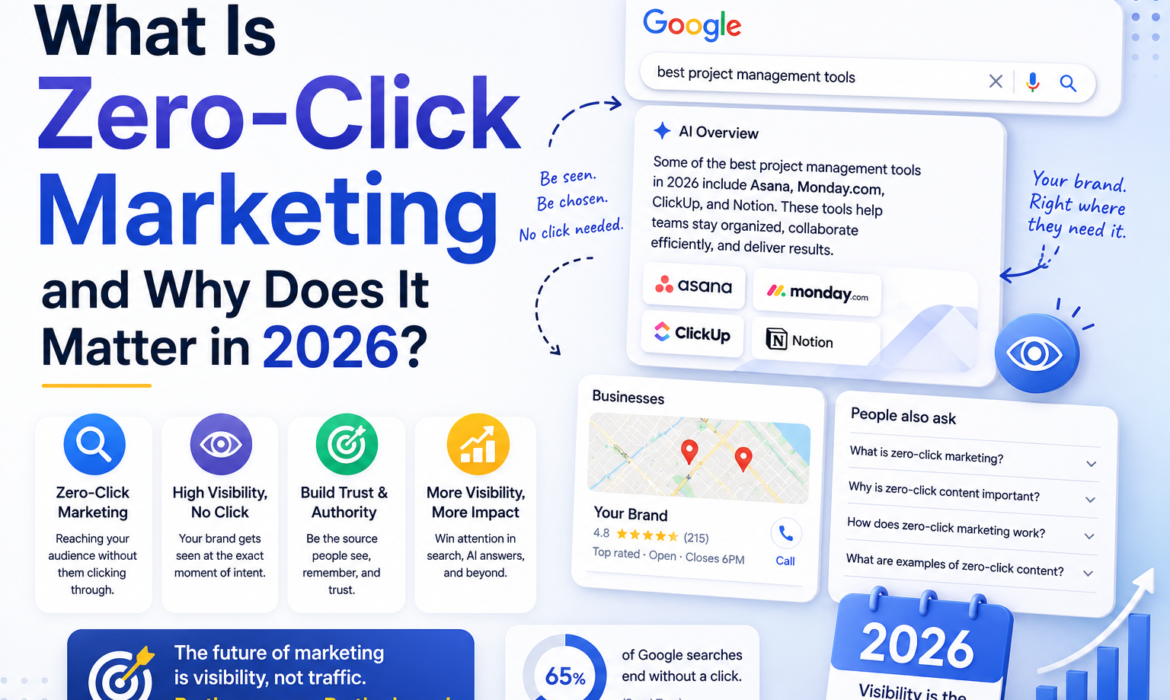
Zero-click marketing is a process or strategy that provides information to users directly in Google search or on social platforms, without requiring a website visit. Its main focus is to create or increase brand trust and awareness by fulfilling the intent of searchers.
Zero-click marketing is like you are hearing a song on the radio. You never buy a ticket first, but after hearing the song too many times, you may decide to buy a concert ticket for the theater.
Why Zero-Click Marketing Is Growing So Fast
Several reasons show why zero-click marketing strategies grow fast:
Instant Answers
People now want to get their desired results immediately, whatever they search for in a SERP, without having to click on any links or visit any websites.
Direct Solution
Attributes like knowledge panels, featured snippets, and AI overviews often provide the exact answers that users frequently need in search results.
AI-Powered Search
People use AI assistants to find answers, suggestions, and solutions without visiting any further sites. As these responses become more common, companies need to optimize their content to be referenced, discovered, and trusted by these platforms.
Platform-First Experience
Social media is a trusted platform that people visit daily. They explore various brands on LinkedIn, Instagram, TikTok, etc., to analyze reviews, read their comments, and sometimes decide what to buy without visiting the actual website of that brand.
Growing Brand Visibility
Even if customers don’t open or explore your website, they keep seeing your brand over and over again, and your brand name will stick in their minds. This will build their trust, and they will be more likely to choose you when they need your service or product.
Smarter Buying Decisions
Seeing a brand multiple times in AI tools, social media, and even in search engines increases the chances of choosing your brand later.
Beyond Clicks
Brands are no longer focusing on website clicks. They also want more people to see their content (impressions), interact with it (engagement), know about the brand (brand awareness), and have a lasting impact on their purchasing decisions (impact).
How Zero-Click Marketing Works
Zero-click marketing is a way to help people discover your brand before they ever visit your website.
Let me simplify it. Usually, what happens is the following:
- Someone has a question.
- Platforms like Google, AI tools, or social media display your content directly to users.
- Users notice your brand without clicking on your website link.
- Trust builds smoothly.
- When they need to buy a product, he comes back to your site.
A real example of zero-click marketing:
Let’s suppose you are new in a city and keep hearing your friends recommend the same restaurant. You have not checked their menu or website or visited the place. After hearing it too many times, whenever you decide where to eat, you definitely choose this restaurant.
Zero-Click Marketing vs Traditional Marketing
Both strategies aim to reach users more effectively, but they work differently.
| Features | Traditional Marketing | Zero-Click Marketing |
| Main Purpose | Drive users to a website, landing page, or sales funnel | Providing results to users where they are searching for information. |
| Success Metrics | Clicks, website traffic, leads, and conversions matter. | Brand visibility, awareness, engagement, and mentions |
| User Journey | Users must visit the website to get the solution | Users can get answers without visiting the website |
| Content Placement | Website, landing pages, blogs, and ads | Online communities, social media forums, AI answers, search results |
| Focus | Generate more traffic and conversions | Build authority, trust, and brand recall |
| SEO Strategy | Optimize content to attract clicks | Optimize content to be visible in AI and search results |
| Brand Exposure | Limited to users who click | Reaches users even with no clicks |
| Best For | Increase conversions and traffic | Enhance brand awareness and long-term visibility |
How to Create a Zero-Click Marketing Strategy
Want to make your brand visible where people also search, ask, and scroll questions without mainly depending on website clicks? Here is how you can build this step by step.
Understand the Intent of Your Audience
Start with the real questions that people most commonly ask. Think about general problems, doubts, and comparisons related to your niche or service.
Create Answer-First Content
Write clear answers that solve the user’s problem directly and simply, and they can easily appear in Google snippets, AI overviews, and social posts.
Focus on Visibility Instead of Traffic
Your purpose is just to appear in feeds, search results, and summaries, even if users don’t click through.
Write for Featured Snippets & AI Searches
Use concise definitions, bullet points, and structured answers that fit easily in the algorithm of search engines.
Engage on Various Online Platforms
Always update and share helpful content on platforms like LinkedIn, Instagram, Medium, and other channels where users consume information.
Create a Reliable Brand Visibility
Use the same style, brand name, and consistent messages everywhere you appear online so people can recognize you across various platforms.
In simple terms, it is a strategy to be visible everywhere your audience requires an answer without waiting for them to visit your website.
Does Zero Click Marketing Hurt SEO?
Not really, but it changes the way of working. Many people think that it is bad for SEO because users get their answers without clicking or visiting a website. It is certain that when few people click on a link, the web traffic decreases for different keywords. But now people are attracted to brands long before they visit a website via AI overviews, featured snippets, social posts, or other discussions.
In my opinion, visibility is more important. If your brand keeps appearing while people search for information and is used as an answer, you are still getting value. Indeed, strong SEO helps your content to show up in many zero-click appearances in the first place. Instead of replacing SEO, zero-click marketing is changing how success is measured. The main goal is not just getting clicks. It’s making sure your brand is visible where people need information and remembering your brand while they are ready to take action.
Types of Zero-Click Search Results
Various kinds of zero-click features are essential to know to optimize your content in 2026. These are as follows:
Featured Snippet
It is a top box that shows a quick answer on the SERP. It takes information from different sites and converts it into short paragraphs, bullet points, or tables. If you write your content in this style, it’s a great opportunity to appear here.
Direct Answer Box
Unlike featured snippets, direct answer boxes are Google’s own quick replies based on its knowledge. Google doesn’t pull the answer from any site and doesn’t encourage the user to go anywhere else. Instead, Google instantly shows the fact right up front to you. These answers are time, definitions, calculations, or weather.
AI Overviews
Google updates its algorithm from time to time to keep improving. It uses AI now to show the quick summaries known as AI Overviews. These overviews are created by the combination of information gathered from different sources and common search information in search results, especially in AI-powered searches.
Knowledge Panel
The knowledge panel is an information box on the Google search results page. If provided, quick facts about an entity you have searched. This may be a person, place, organization, or description. This box provides an instantly helpful summary so users don’t need to visit multiple sites to get an answer.
Local Pack
The local pack is a highlighted section shown at the top of Google search results. It features a map and a list of three local business listings that match a location-based query. It is also known as the Google 3-pack or map pack. They are so visible because they show above the blue-linked organic search results, and that’s why brands get the majority of phone calls, clicks, and visits.
People Also Ask
People Also Ask (PAA) boxes are sections in Google Search that display the common questions related to your search. Users get quick answers and explore topics without typing new queries.
When you click on it, a shorter question appears, and the section will expand and show more related topics.
Common Zero-Click Marketing Mistakes to Avoid
Zero-click marketing is a modern way of delivering information directly on search results pages, such as featured snippets or AI summaries. Here are some common blunders that you can avoid.
Chasing Clicks Only
A zero-click strategy focuses on being remembered, seen, and trusted instead of just getting clicks and traffic on a website. It is not necessary that every user be ready to visit a website and take action immediately. By appearing in AI-generated answers, Google snippets, and online communities, companies can be visible throughout the user journey.
Ignoring Brand Awareness
If users find a helpful answer but don’t remember which brand provided it, they are unlikely to come back later. Zero-click searches are not just about answering questions. It’s also about making your brand recognizable so users are aware of you when they need a product or service in the future.
Missing Search Intent
If your written content is not about the intent of the users, it can negatively affect your visibility. Suppose you have written on a topic the user searches and comes to your site, but their problem remains unsolved and they don’t get the answer to their questions; your content has less chance to appear in zero-click marketing. Always write content according to the search intent of the audience.
Overcomplicated Content
Instead of giving long explanations, write brief, straightforward, and understandable responses. It can be more difficult for lengthy content to show up in AI summaries, featured snippets, and other zero-click SEO searches. Your main focus is to answer first; after that, add the additional explanation if needed.
Limiting Your Reach
It is good practice to focus mainly on your website, but it can reduce your chances of connecting with potential customers. People search through Google, social media apps, various AI tools, and online communities. So, you need to be active across multiple platforms. It will help your brand to stay visible wherever your audience searches for any query.
Inconsistent Branding
Following different styles, tones, and messages across your website can confuse your customers. It happens when your brand looks or sounds different every time a visitor arrives. It breaks the trust of the visitors. Inconsistent colors and styles make it harder for users to remember your brand. A uniform brand identity is essential to build a brand reputation needed to win customers’ loyalty.
Conclusion
Zero-click marketing simply means that the game is no longer about just clicks. People are seeing your brand on Google, AI answers, and social media without ever visiting your website. And that’s where the real deal starts: being remembered.
If people see you repeatedly in search results or AI answers, they start to trust you. When they are ready to buy, they choose your brand without hesitation.
The simple thing is not to focus on website traffic; build your visibility and create a strong brand image in people’s minds.
Frequently Asked Questions
How do AI overviews affect SEO traffic?
AI Overviews may reduce website clicks, but they increase the brand’s visibility, which matters more. If your content shows in the AI overviews, it will build trust, and people will know your brand without visiting your website.
How do you optimize for zero-click searches?
Here are some steps to optimize content for zero-click searches:
- Write clear, concise, and valuable content.
- Use simple headings.
- Use bullet points.
- Write shorter sentences.
- Create easy content for both users and search engines to understand.
What should you measure besides clicks?
Clicks only show that someone noticed your ad or website. To determine your true success, consider actions such as sales or sign-ups, how users interact with your content, and the cost of acquiring a customer.
How do you know if your zero-click strategy is working?
A zero-click strategy is effective when users see your brand right on search results, such as local listings or AI overviews. Instead of focusing on website clicks, it concentrates primarily on building brand visibility and ultimately pointing to more direct visits and sales.